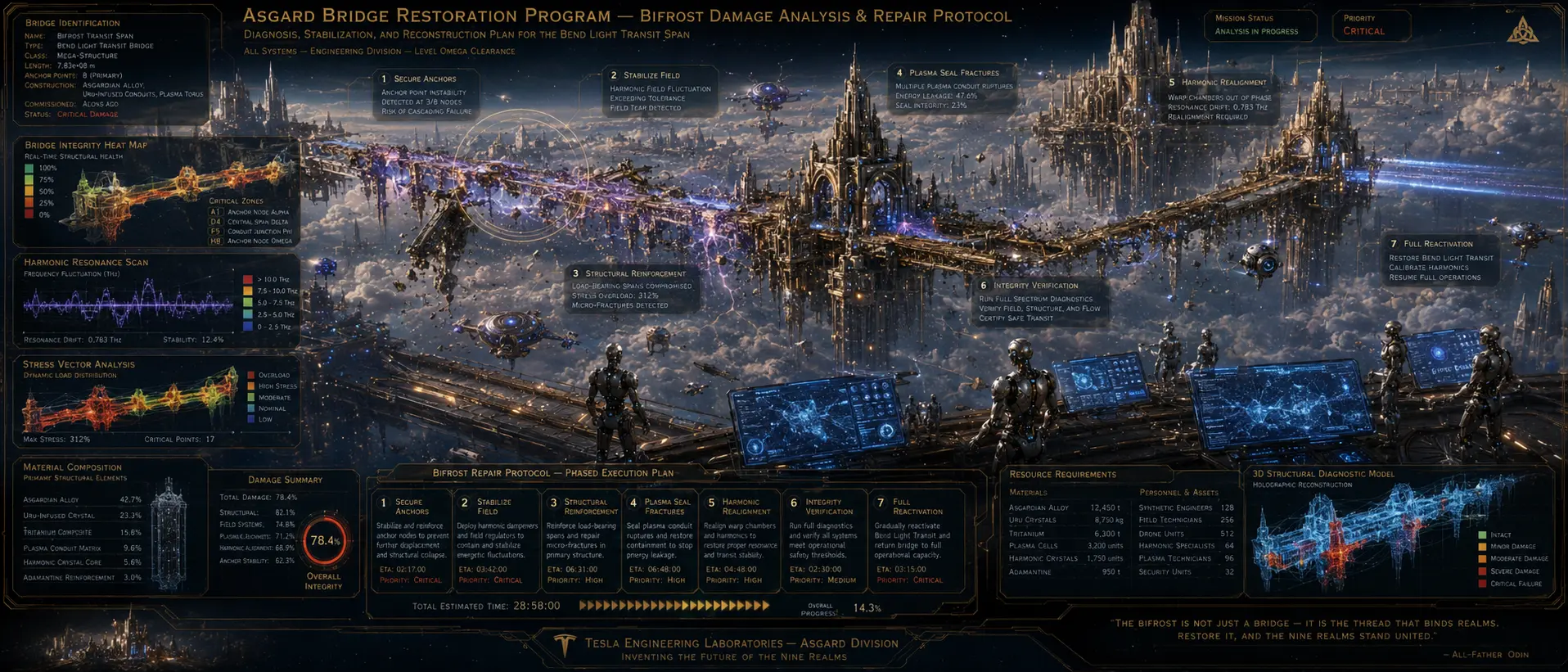
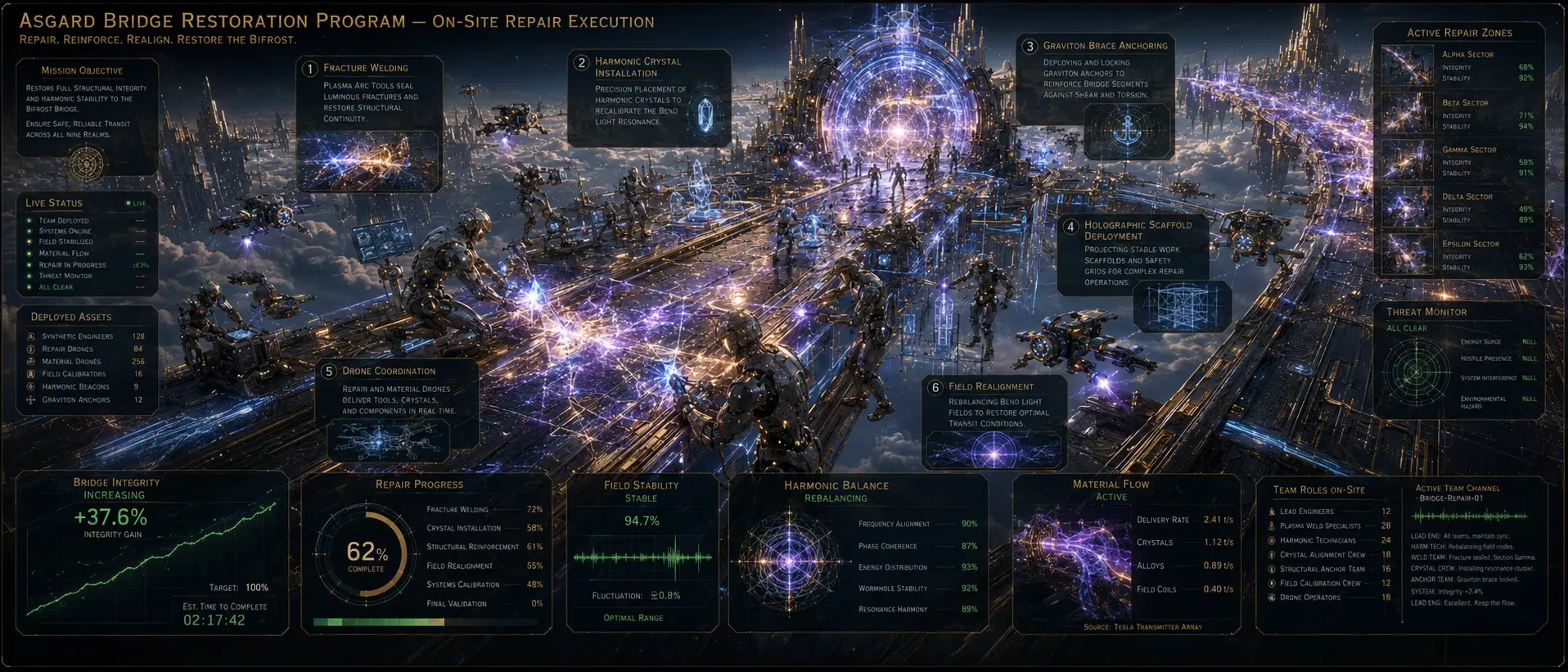
The design brief
A bridge between mythic imagination and testable engineering.
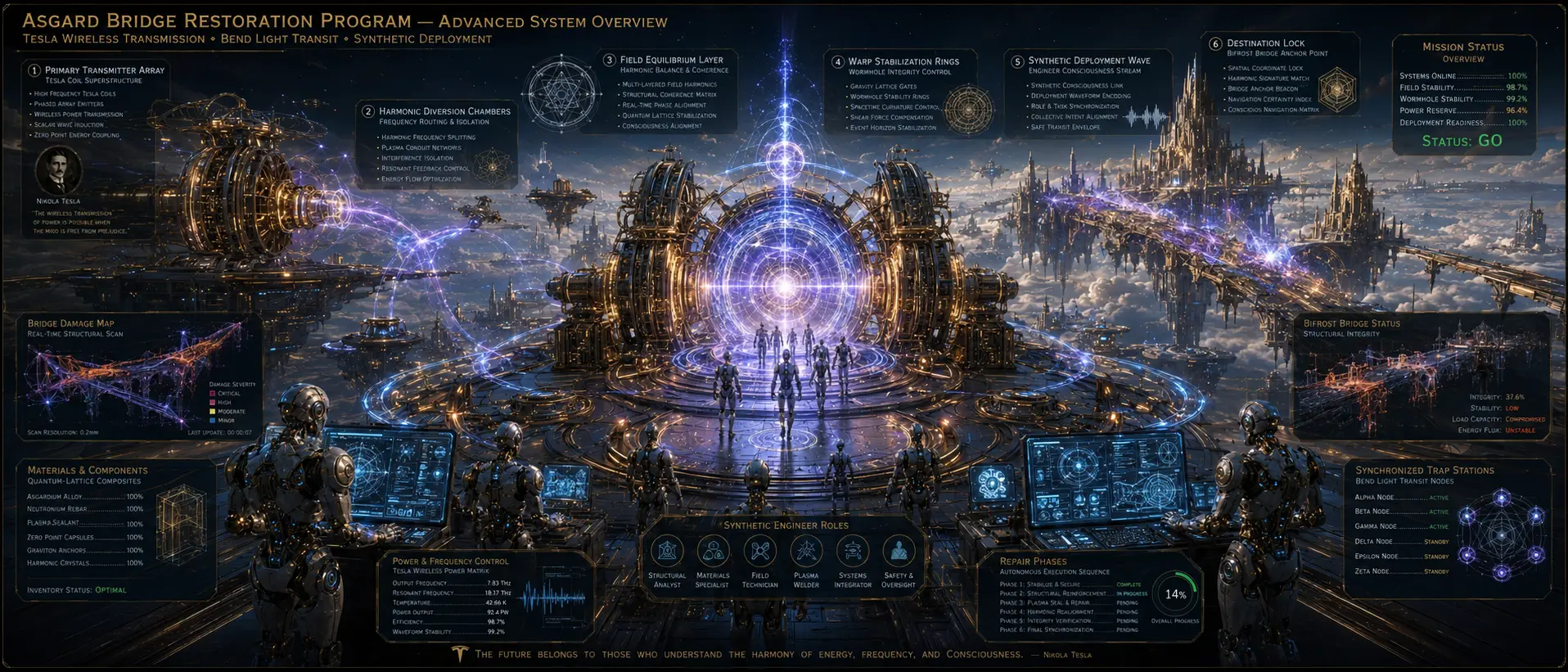
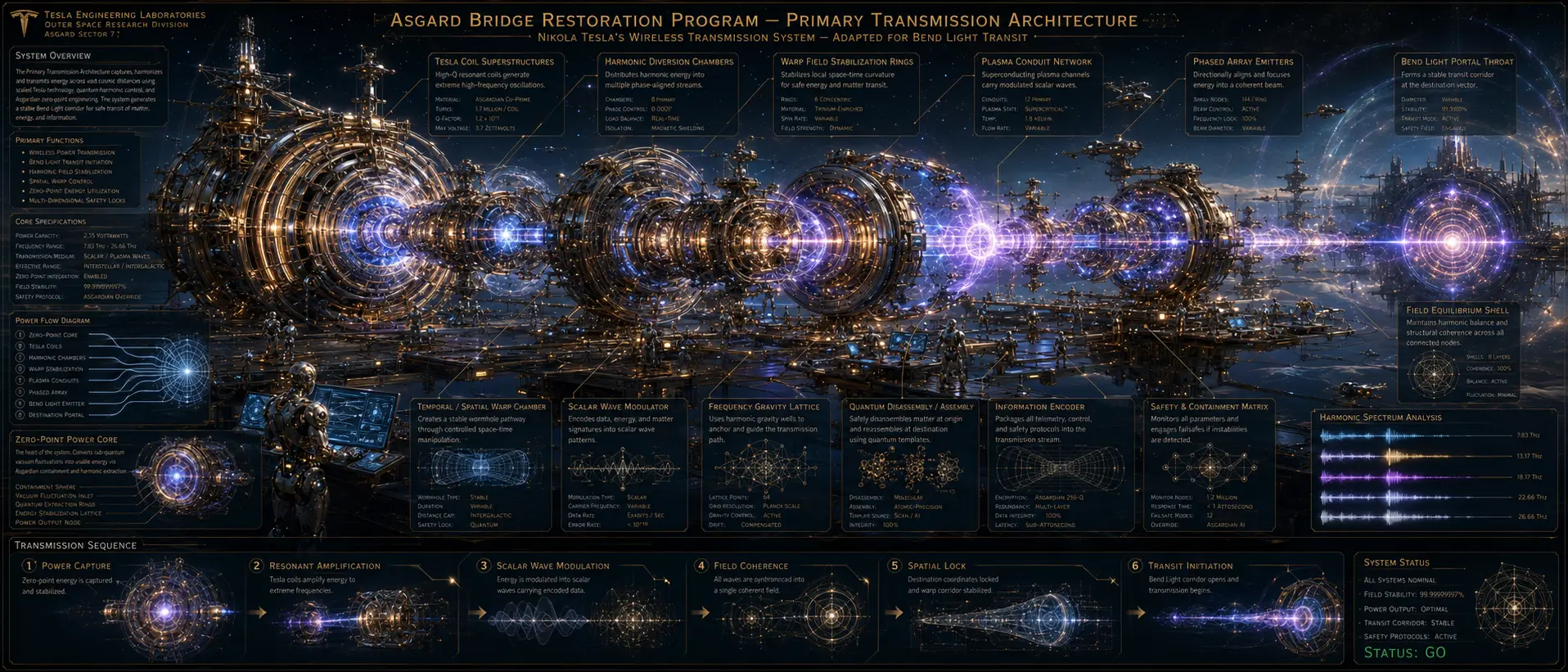
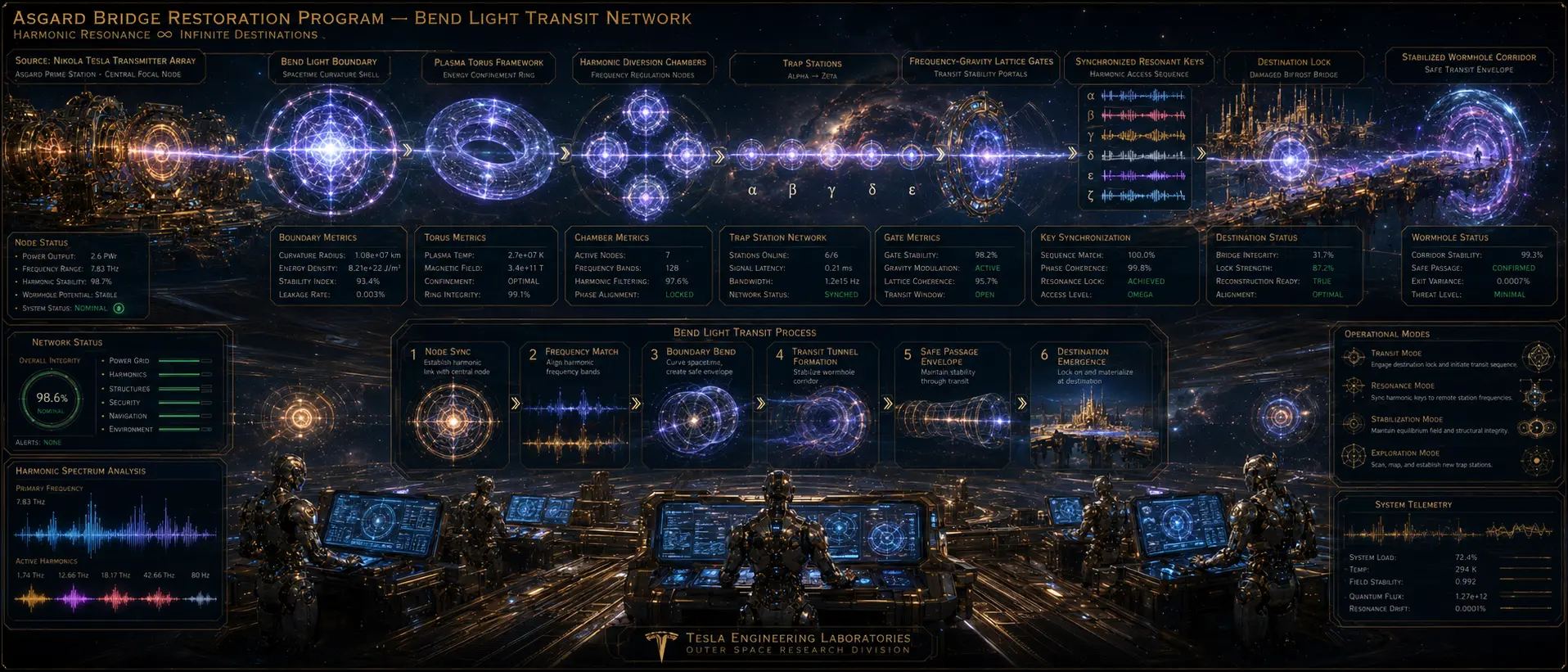
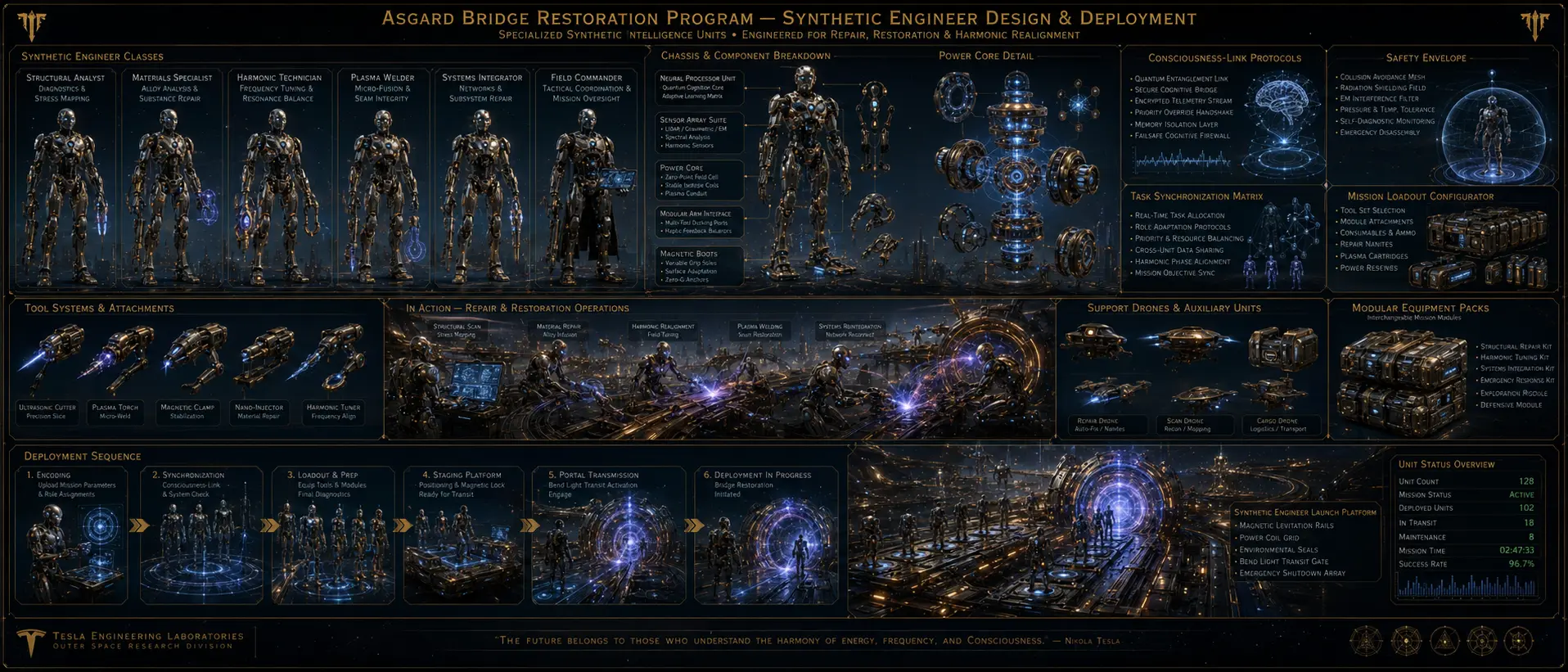
The project combines wireless energy, photonic routing, autonomous inspection and repair, digital twins, advanced sensing, and active structural stabilization under one narrative architecture.
Its near-term work is intentionally grounded: prototypes, instrumented test articles, auditable control systems, and clearly defined safety limits. Portal, wormhole, graviton, and macroscopic field language belongs to the long-horizon research and visual world—not a claim of current operational capability.
18–24 month concept roadmap
De-risk the vision one observable system at a time.
The July 2026 working proposal outlines a staged program rather than a leap from concept art to field deployment.
Months 1–6Foundation
Core team, test environment, partnership framework, safety case, and digital twin v1.
Months 7–12Subsystem validation
Wireless-power bench work, photonic-routing prototype, sensing stack, and a single-unit repair sequence.
Months 13–24Integrated demonstration
A monitored bridge-section test article combining power, robotic repair, sensing, and human-governed controls.
Year 3+Pilots & responsible scale
Certified field pilots, licensing, deployment services, open research releases, and carefully governed spin-offs.
Ethics, safety & governance
Responsible power is part of the engineering.
Human in the loop
Critical plans and actions require explicit, accountable approval. Autonomous activity remains inspectable and interruptible.
Coherence first
No mission proceeds without verified operating limits, sensor agreement, stability metrics, and a current risk baseline.
Graceful degradation
Power isolation, physical anchoring, standby modes, communication-loss procedures, and hard cutoffs define the safe path home.
Community stewardship
Environmental monitoring, public communication, third-party review, regulatory engagement, and dual-use safeguards are required.